
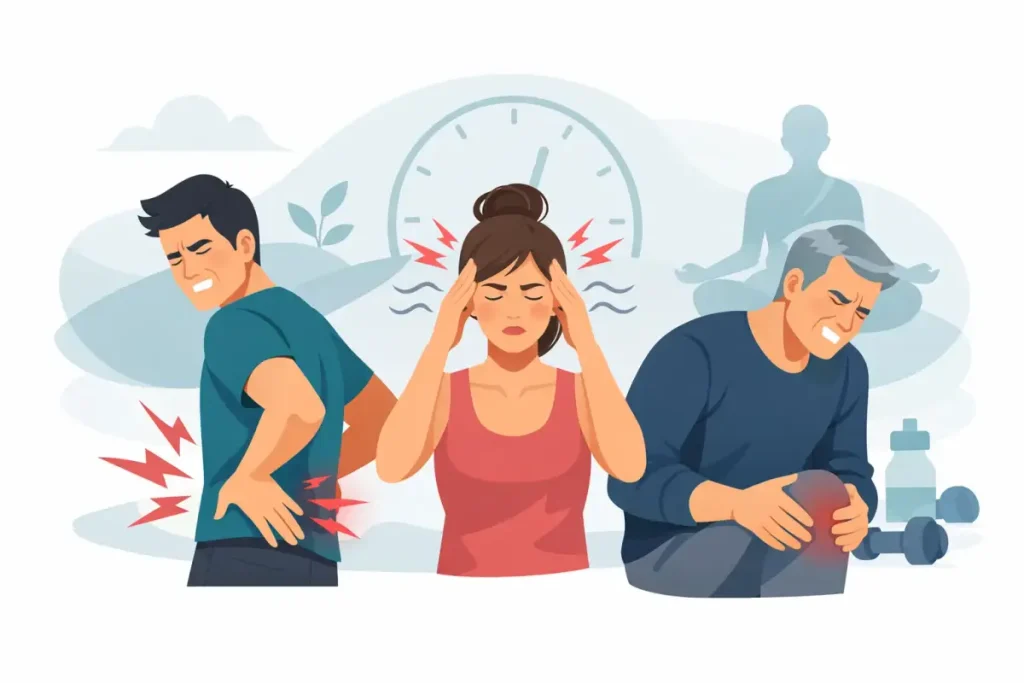
An afternoon at the desk suddenly feels like a mountain run. The shoulders are hanging, every movement takes effort, and even after coffee the head remains cottony. If you want to quickly reduce physical exhaustion, you don’t necessarily need a day off – but the right impulses. Because exhaustion is not a sign of a lack of discipline. It is often the clear feedback from a body that has performed too long and has not regenerated enough.
What can be behind physical exhaustion
Physical exhaustion does not only arise after a sleepless night or intensive training. It is the sum of many small loads particularly often: long sitting, one-sided movements, high deadline pressure, too short breaks, restless sleep and a diet that happens on the side in everyday work. Tense neck, back or shoulder muscles can also cost a lot of energy. The body remains in alarm mode, although the working day is long gone.
The decisive factor is the distinction between temporary fatigue and exhaustion that keeps coming back or intensified. After an exceptionally exhausting week, sleep, fluid and targeted relaxation often help. However, if you do not recover energy for weeks, become unusually short-lived, are severely dizzy or notice pain and other symptoms, you should have this clarified medically. Quick help in everyday life does not replace a diagnosis.
Reduce physical exhaustion quickly: the first 30 minutes
When the battery is empty, many react with more coffee, even more speed or a long phase on the sofa. This can be pleasant in the short term, but does not always solve the cause. It is more effective to consciously signal to the nervous system: the stress is over for the moment.
Start with water and exercise. A large glass of water, then five to ten minutes of brisk walking, climbing stairs or loosely shaking off the circulation and breathing. It’s not about sport or performance. Changing from sitting, tension and conscious movement helps many people to interrupt the leaden feeling.
This is followed by a small, real break with no screen. Sit upright, loosen the jaw and lower the shoulders as you exhale. Exhale slowly a few times, slightly longer than one. This simple change can help lower inner restlessness and get the body out of the constant stress.
Even a small meal can be useful if the last meal was long ago. Combine some protein with complex carbohydrates, for example yoghurt with oats, a whole wheat bread with cottage cheese or a handful of nuts with fruit. Sweet things alone provide a short boost for some people, but this is often followed by the next low.
The most common energy robbers in everyday life
Exhaustion is rarely triggered by just one factor. Anyone who recognizes the personal energy robbers can take more targeted countermeasures.
Sleep that doesn’t really recover
Seven or eight hours in bed do not automatically mean deep regeneration. Late screen time, alcohol, constant brooding, irregular bedtime or tension can significantly reduce the quality of sleep. If you wake up stiff and tired in the morning, you should not only look at the duration of your sleep, but also at the entire evening ritual.
A clear transition phase is helpful: dimming light, ending professional messages, recording the next day briefly and then bringing the body to rest. That doesn’t have to be perfect. Even a recurring 15-minute ritual creates a reliable counterpoint to the hectic day.
constant tension in the neck and back
Many working people work for hours with their shoulders pulled up, head pushed forward or unmoved back. This feels normal at first. But muscles that never really let go, use energy and can reinforce the impression of being permanently drained.
Here, frequent mini breaks help more than a single long stretching unit in the evening. Stand up briefly every hour, open the chest, slowly circle your shoulders and change position. The same applies to physically stressful work: small relief phases are not luxury, but a protection for regeneration.
Too much power, too little rhythm
Training is healthy – not overtraining. Anyone who is exhausted for days after every sport, sleeps poorly or reacts unusually irritated may need less intensity and more relaxation. This also applies to people who work physically at work. Regeneration does not only arise on vacation, but in the daily dosage of stress and break.
Relaxation as a targeted regeneration impulse
Some people can’t just switch off at the touch of a button after a full day. The body is tired, but the muscles remain tense. Exactly then, a targeted relaxation application can make sense – not as a substitute for sleep, exercise or medical clarification, but as support to get out of the tension mode.
For people who have little time and do not want classic manual treatment, Wundermassage in Zurich offers a non-contact application electromagnetic pulses on. The session takes place fully clothed and lasts only 10 to 20 minutes depending on the offer. straight at stress-related muscle tensionThis format can be attractive to a heavy body feeling or the desire for a short break: no long preparation, no massage oil treatment and no loss of time due to time-consuming appointments.
How strong the effect is is individual. It is crucial to see the application as part of a meaningful regeneration plan. Anyone who then returns directly to the hustle and bustle, screen stress and lack of sleep will hardly build up their own energy reserves in the long term. Combined with breaks, exercise and better sleep hygiene, however, conscious relaxation can make a noticeable difference.
When you shouldn’t just go on
Not every exhaustion can be solved with a walk or a relaxation unit. Have complaints checked by a doctor if the tiredness lasts longer, is new and unusually strong or significantly restricts your everyday life. This is especially true for chest pain, shortness of breath, fainting, tachycardia, fever, unexplained weight loss, severe mood lows or neurological abnormalities.
Iron deficiency, thyroid changes, infections, medication or mental stress can also be behind persistent exhaustion. Anyone who creates clarity often saves a lot of time and avoids pressing warning signals away. Self-care doesn’t mean having to solve everything on your own.
A realistic routine for more energy
You don’t have to completely rebuild your everyday life. Choose three solid anchors for the next seven days: a glass of water and daylight in the morning, ten minutes of exercise without a phone in the morning and a screen-free period of rest in the evening. Complete these habits with a conscious body break as soon as the neck, back or shoulders feel firm – not only when nothing works anymore.
Those who sit a lot benefit from short activation phases. Those who work physically need more targeted relief and sufficient sleep. If you train intensively, you should not rate rest days as a step backwards. Reducing physical exhaustion quickly does not mean outsmarting the body. It means taking his signals seriously and regularly giving him the conditions for real relaxation.
The most effective change often begins unspectacularly: a break before the body has to force it. Give your regeneration a fixed place on the calendar today – your energy is not a random product.
The suitability is discussed individually before use. Results can vary. Miracle massage does not replace a medical diagnosis or prescribed treatment. The application is not carried out during pregnancy. Miracle Massage · Zurich

