
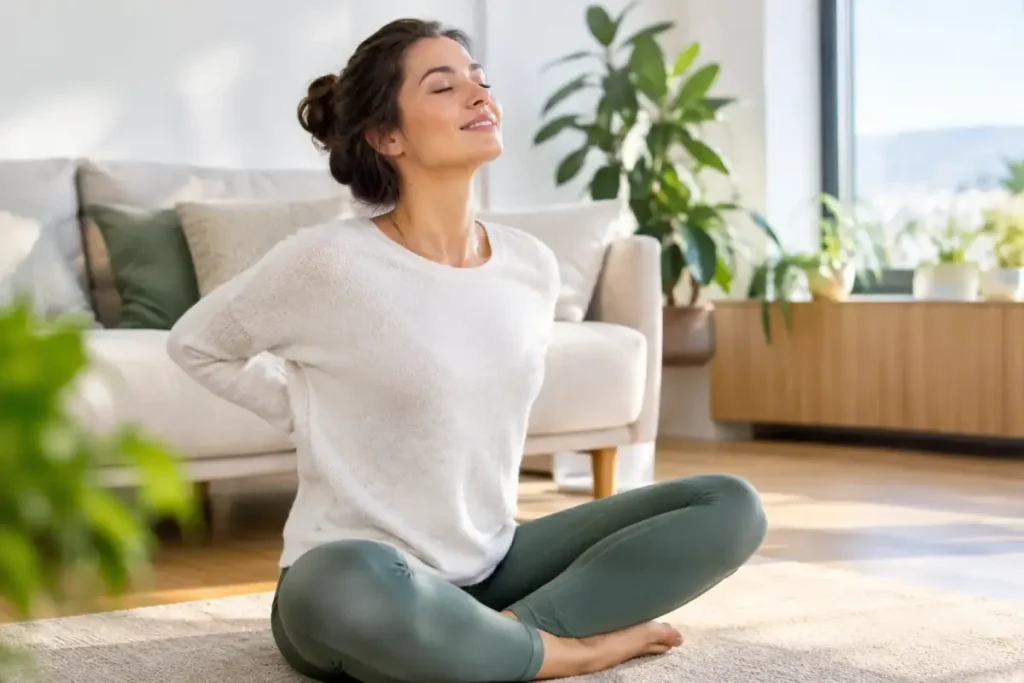
If the neck becomes hard when looking at the screen, the back pulls after a long day at work and the head does not switch off despite tiredness, the body needs more than a short break on the sofa. The Best solutions for body relaxation Start where stress actually arises: in the interplay of muscles, nervous system, breathing, sleep and movement. It is not important to do as much as possible at once. It is crucial to find a method that fits into a full everyday life.
Body relaxation does not mean that all tension has to disappear. A certain amount of tension stabilizes us, helps with sports and keeps us efficient. It becomes problematic when the body no longer finds its way back into its recovery mode. Then tense shoulders, restless sleep, a heavy body feeling or reduced mobility can become noticeable. With the right stimuli, this cycle can often be gently interrupted – medication-free and without hours of appointments.
Why the body doesn’t just let go of itself
Stress is not just a thought. Under time pressure, with constant accessibility or after intensive stress, the body often unconsciously tenses the muscles. The neck, jaw, lower back, hip and pelvic floor are particularly affected. If you sit for a long time, this pattern also reinforces: some muscle groups work too little, others take over too much.
A free evening alone is therefore not always enough. The body needs clear signals for safety and recovery. Slow breathing, warmth, gentle movement or targeted relaxation stimuli can help the nervous system switch from tension to regeneration. Which solution fits best depends on whether stress, pain after stress, sleep problems or a feeling of severity are in the foreground.
Best solutions for body relaxation: which is really suitable for everyday use
The most effective routine is usually not the most complex, but the one that actually takes place on a full Tuesday. These methods complement each other in a meaningful way without turning any recovery into another project.
Breathing as a quick switch for more rest
A calm, prolonged exhalation can noticeably help lower the pace in the body. Sit up straight, let your shoulders loose and inhale for about four seconds. Then exhale for six to eight seconds. Repeat for two to five minutes.
It’s not about perfect technology, it’s about regularity. Especially before going to bed, after a conflict-ridden conversation or after a long time sitting, this little break can make the difference. In the case of dizziness, breathe normally and do not work against the breath.
Gentle movement instead of complete standstill
With a tense body, doing nothing often feels logical. But long staying can increase stiffness. Short, light movement impulses are better: a ten-minute walk, Slow shoulder circles, hip mobilization or conscious stretching after several hours at the desk.
The intensity should remain low. The aim is not training, but blood circulation, mobility and the feeling of arriving in your own body again. After a hard sports session, a relaxed walk can make more sense than aggressive stretching. In the case of acute or unexplained pain, the stress should be clarified by a doctor.
Warmth, sleep and a relaxed evening rhythm
Warmness is experienced by many people as particularly beneficial. A warm shower, a bath or a heat pillow can prepare the muscles for a rest period. In the case of fresh injuries or significant swelling, however, heat is not always the right choice.
Sleep is not a side issue either, but the daily regeneration time of the body. A recurring evening rhythm helps more than trying to catch up on the weekend’s sleep. Dimmed light, one end for work and emails and ten quiet minutes without a screen can make the transition much easier. If you wake up regularly exhausted or snores heavily, you should have the cause checked professionally.
Non-contact deep stimulation for people with little time
Some people want more than a relaxation exercise, but don’t want a long massage, no touch or appointment with change. Here modern, non-contact applications be a practical addition. Electromagnetic Pulses Aim to stimulate deeper muscle areas and promote a feeling of loosening and regeneration.
At Wundermassage in Zurich, the treatment is fully clothed and contactless. A full body application takes about 10 to 20 minutes, depending on the setting. It can be particularly interesting for professionals with recurring back or neck tension, active people after intensive training or people who prefer a hygienic, time-efficient form of relaxation.
Such an application does not replace a medical diagnosis and is not suitable for every situation. In the case of implanted electronic devices, during pregnancy or in the case of serious previous illnesses, the suitability should be clarified individually in advance. It is precisely this clarification that creates security and ensures that technology is used sensibly – as a supplement to exercise, sleep and a healthy handling of stress.
The pelvic floor: an often overlooked part of the relaxation
The pelvic floor is often only associated with training and strengthening. In fact, a well-functioning deep muscle needs both: targeted activation and the ability to let go. Permanent stress, sitting for a long time, a birth, intensive exercise or chronic tenses can cause this region to become unbalanced.
A pelvic floor that is too tense can be very different, for example through a feeling of pressure, discomfort when sitting or difficulty relaxing completely. Conversely, weakness can be associated with reduced stability or unwanted loss of urine. It is worth taking these signals seriously without being ashamed. Qualified clarification and appropriate training can provide orientation here.
Contactless pelvic floor applications can be an option for people who want to efficiently address their deep muscles. The individual starting point remains decisive: If you hold tension in particular, you may first need a different focus than someone with clear muscle weakness. Flat-rate solutions are of little help – good advice, on the other hand, is very useful.
This creates a routine that does not end after three days
Instead of introducing ten new habits, choose a fixed anchor point. This can be the time after lunch, the way home or half an hour before sleeping. Combine a short measure: three minutes of breathing, five minutes of mobilization or a walk without a phone.
If necessary, supplement this base with targeted treatment, especially in phases of high workload, after sporty peaks or when tension recurs despite good habits. Don’t just observe pain levels. Also, pay attention to whether you breathe more freely, fall asleep easier, feel more flexible when you get up, or pull your shoulders less frequently in everyday life.
Body relaxation doesn’t have to be complicated or time-consuming. It often begins with a small, repeatable moment when the body notices: performance is over, recovery can begin.
The suitability is discussed individually before use. Results can vary. Miracle massage does not replace a medical diagnosis or prescribed treatment. The application is not carried out during pregnancy. Miracle Massage · Zurich

