
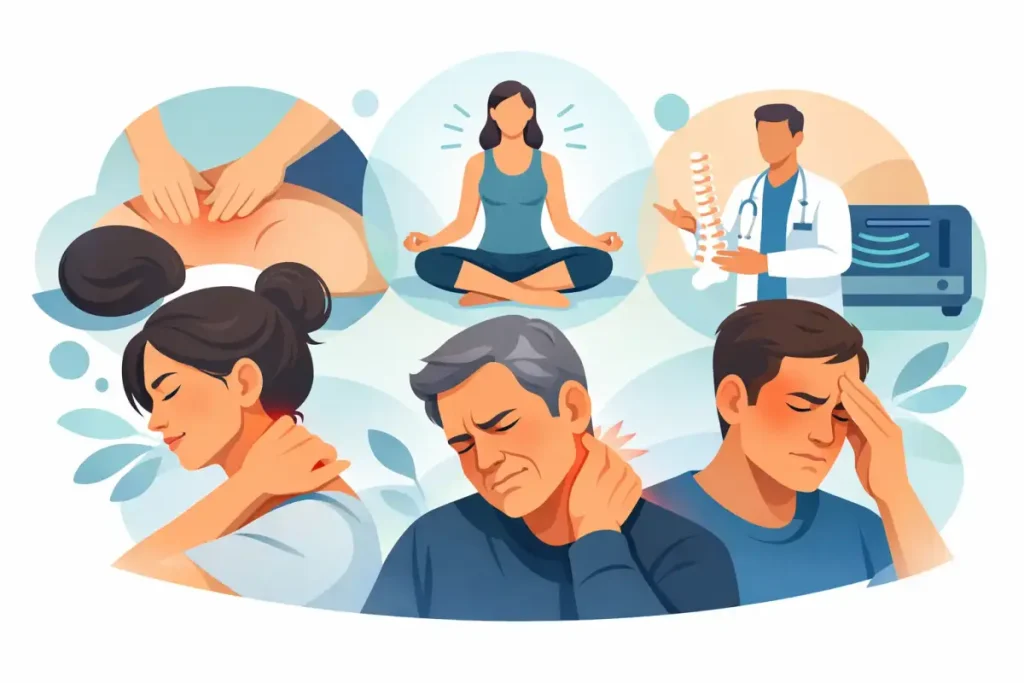
The neck often doesn’t only get in touch after an accident, but in the middle of the working day: the head feels heavy, the shoulders are pulling up, and when turning in the car it pierces. The Top methods for neck pain are therefore not automatically the most complex or strongest treatment. The decisive factor is whether the symptoms are triggered, especially due to poor posture, stress, overload, lack of exercise or a more serious cause.
If you want to look more freely again, sleep and work quickly, you need an approach that suits everyday life. Sometimes small motion impulses and a better screen position are enough. In the case of stubborn tension, a targeted relaxation session can be useful. And with warning signs, the following applies: Don’t wait and get medical clarification.
Why Neck Pain Getting So Stubborn
The neck is not an isolated zone. It connects head, shoulders, thoracic spine and jaw. Sitting for hours with your head pushed forward, one-sided wearing, unusual stress or tense concentration can permanently set the muscles on the alarm. A cycle often gets going: tension restricts movement, and limited movement in turn increases the feeling of stiffness.
Stress plays a bigger role than many people think. Those who work under time pressure or sleep badly at night often unconsciously pull their shoulders up. A purely local treatment can then be pleasant, but does not necessarily solve the entire tension pattern. Good methods therefore take into account movement, relaxation and the personal stress situation.
Top methods for neck pain: what fits when?
There is no standard solution. The right method depends on how long the symptoms last, how strong they are and what triggers them in everyday life. In the case of acute, slight tension, a gentle start counts. In the case of recurring complaints, a combination of short-term relief and long-term change is usually required.
Movement instead of protective posture
With a tense neck, complete calm seems logical at first glance. However, long-term avoidance of any movement can increase the stiffness. Slow, pain-free movements are better: Turn your head gently to the right and left, circle your shoulders or wake up briefly after a phone call.
It’s not about stretching yourself with force. A stretching stimulus can be felt, stabbing pain is a stop signal. Exercise is particularly effective if it takes place intensively several times a day instead of once a week. Three minutes between two meetings is often more realistic and sustainable than a perfect training plan that never starts.
Relieve workplace and everyday life
The laptop on the kitchen table, the smartphone at chest height and a poorly adjusted office chair are classic amplifiers. The upper edge of the screen should be approximately at eye level, the forearms rest relaxed and the feet have stable contact with the ground. This does not take away any tension immediately, but reduces the daily supply of stress.
Small habits also count: bring the cell phone closer to the face, change bags more often, plan breaks when driving and do not make calls with the telephone receiver jammed. Ergonomics is not a rigid sitting in ideal position. It means changing positions regularly.
warmth and conscious recovery
Warmth can be pleasant with muscular stiffness. A warm bath, a hot water bottle or a hot shower promote the feeling of loosening and create a break from permanent tenses. In the case of a newly injured, clearly swollen or inflammatory area, heat, on the other hand, is not always the right choice.
The quality of recovery is at least as relevant. Anyone who lies with their heads turned at night or wakes up constantly starts the day tensely. A pillow should neither buckle the head sharply nor stretch it backwards. The right height is individual – depending on the sleeping position, shoulder width and mattress.
Manual applications: helpful, but not for every everyday life
Classic massage, physiotherapy, osteopathic or other manual approaches can feel good for muscle tension and support mobility. Your advantage lies in the personal assessment and, depending on the approach, in exercises for everyday life. They are particularly suitable when someone finds touch pleasant and can plan time for regular appointments.
The limits are also practical: a single session does not automatically change the work habits or the stressful stress. Some people find strong grips uncomfortable, others don’t want to change or are looking for a more time-saving addition. Then it’s worth thinking about other forms of relaxation instead of being forced to use a method that doesn’t fit.
Non-contact relaxation as a modern option
For people who prefer a short, clad and non-invasive application Technology-supported relaxation offers be interesting. Wundermassage relies on electromagnetic impulses and a non-contact application with the aim of bringing the body to a deep relaxation state. Especially with a tightly timed everyday work, the small amount of time can be a decisive advantage.
Such applications do not replace a medical diagnosis and are not a free pass to pass warning signs. However, they can fit as a comfortable addition when tension, feeling of stress and need for recovery are the focus. People with implanted electronic devices, during pregnancy or in the case of unclear illnesses should first have them clarified whether this form of application is suitable.
What you shouldn’t do
The most common mistake is to want to aggressively “crack” the neck. Sudden self-manipulations, hard stretches or pressing through the pain can worsen symptoms. Even painkillers should not become a permanent solution to somehow survive every working day. They can be useful in the short term, but should be included in medical or pharmaceutical advice if they are taken again.
Nor does it help to dramatize any tension. A tense neck after a long day of travel is usually no reason to panic. Watch what relief brings, keep moving gently and give the body an opportunity to shut down.
When neck pain needs to be medically clarified
Not every neck pain is a harmless tension. A quick medical clarification is indicated if pain occurs after a fall, accident or whiplash. The same applies to deafness, tingling or loss of strength in the arm or hand, severe headaches, dizziness, fever, unexplained weight loss or pain that increases significantly at night.
Even if the complaints persist or recur again for several weeks despite adapted everyday life and gentle measures, a technical assessment makes sense. A good diagnosis creates clarity – and prevents valuable time from being lost with methods that do not match the cause.
A simple plan for the next seven days
Don’t start with ten changes at the same time. Set the screen higher, build three short movement breaks into your workday and see if your pillow is resting your head neutrally. Complete a warm or relaxation routine at a fixed time of day so that recovery does not only take place when the pain is already dominating.
if you Test a treatment would like to pay less attention to big promises than to your reaction afterwards: Do you feel freer, calmer and more resilient in everyday life? Is the application pleasant and can it be regularly integrated into your daily routine? The best method is the one that is safe, fits your situation and that you can actually use consistently.
Your neck does not have to become a permanent companion between your desk, car and sleep. Give him a small, realistic relief today – and get professional clarity in good time if there are persistent or unclear complaints.
The suitability is discussed individually before use. Results can vary. Miracle massage does not replace a medical diagnosis or prescribed treatment. The application is not carried out during pregnancy. Miracle Massage · Zurich

